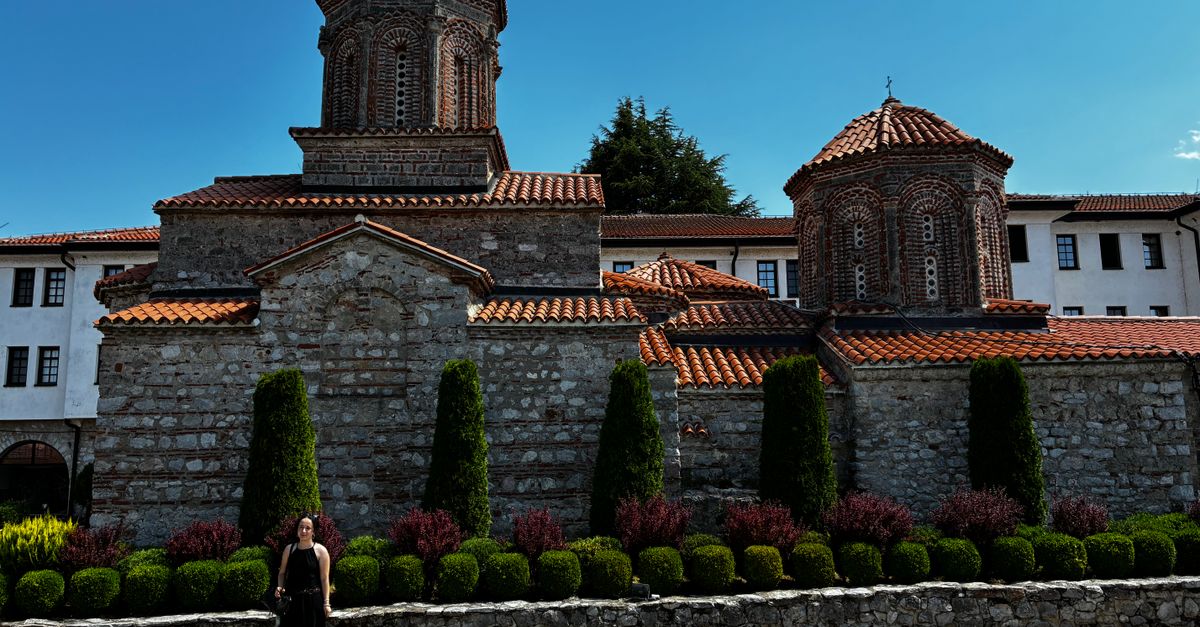
Tucked into a forested hillside above the Radika River in western North Macedonia, Sveti Jovan Bigorski Monastery is one of the most visited religious and cultural sites in the country — and one of the most rewarding day trips from Skopje. If you’re planning a visit, here’s what to know before you go.
A Quick History
Bigorski Monastery was founded in 1020, though the current structure dates largely from the 19th century after a fire destroyed much of the earlier complex. It’s dedicated to St. John the Baptist, and according to tradition, a relic containing the saint’s right hand was once kept here (it’s now believed to be elsewhere, but the story is part of what draws pilgrims).
The monastery has long been an active spiritual center for Macedonian Orthodoxy, with resident monks still living and working on the grounds today. Unlike some historical sites that feel more like museums, Bigorski is a living monastery — which shapes how you should plan your visit.
The Iconostasis: The Main Highlight
The single reason most visitors make the trip is the monastery’s wood-carved iconostasis, created between 1829 and 1835 by local master craftsmen from the Mijak region. Carved entirely from walnut wood, it stretches the width of the church and depicts biblical scenes, plants, animals, and intricate geometric patterns with astonishing detail.
It’s considered one of the finest examples of wood-carving art in the Balkans, and UNESCO has recognized the skill behind similar work from this region. Photography inside the church is often restricted or discouraged, so it’s worth simply taking the time to look closely rather than rushing for a photo.
What to Expect On Site
- The church itself: Dim, incense-scented, and quiet — take a moment to let your eyes adjust and appreciate the carvings and icons.
- The monastery complex: Includes guest quarters, a small shop selling religious items and local products, and peaceful courtyards with mountain views.
- Monks and visitors: You may see monks going about daily routines. Be respectful of their space and avoid loud conversation.
- A small restaurant/guesthouse nearby: Useful if you want a coffee or simple meal after exploring.
Dress Code and Etiquette
As an active monastery, Bigorski expects modest dress from all visitors:
- Shoulders and knees should be covered for both men and women.
- Women are often asked to wear a headscarf and skirt (wraps are sometimes available at the entrance if you forget, but don’t rely on this).
- Speak quietly, especially inside the church.
- Photography may not be allowed in certain areas — look for signs or ask before shooting.
It’s a good idea to bring a scarf or shawl and a long skirt or trousers just in case, particularly if you’re visiting in summer when it’s tempting to dress lightly.
Opening Hours and Timing
The monastery is generally open to visitors daily, though hours can shift around religious holidays and services. Early morning or early afternoon tends to be quieter, especially outside of weekends and summer holidays when tour groups are more common. Allow 45 minutes to an hour on-site, more if you want to sit in the courtyard or grab a bite at the nearby guesthouse.
How to Get There
Bigorski Monastery sits just off the main road between Gostivar and Debar, roughly 2–2.5 hours from Skopje by car depending on traffic and stops. Public transport options are limited and often involve a bus to Mavrovo or Gostivar followed by a taxi, which can make timing unpredictable for a day trip.
Most visitors find it easier to combine Bigorski with other stops in the Mavrovo region — the monastery pairs naturally with Mavrovo Lake, Mavrovo National Park, and the small ski-town atmosphere of Mavrovo village. This is exactly the kind of route Millennium Express runs as a private day tour from Skopje, with flexible stops and no need to coordinate buses or taxis along the way — useful if you’d rather spend your time at the monastery than figuring out logistics.
Best Time to Visit
Spring and early autumn offer the most comfortable weather for exploring both the monastery and the surrounding mountains. Summer is busier but still manageable outside of midday heat. Winter visits are possible and quite atmospheric, though mountain roads can be affected by snow — worth checking conditions or arranging transport with a driver familiar with the route.
Nearby Stops Worth Combining
- Mavrovo Lake – a scenic reservoir with mountain backdrops, about 20–25 minutes away.
- Mavrovo National Park – hiking trails and alpine scenery for those with extra time.
- Galičnik – a traditional mountain village known for its stone architecture, a bit further off the main road.
A full day trip covering Bigorski, Mavrovo Lake, and a scenic mountain drive is a popular combination for visitors who want to see both the cultural and natural sides of this region in one outing.
Final Tips
- Bring cash for the small shop or guesthouse, as card payment isn’t always reliable this far from Skopje.
- Carry water and snacks for the drive, as options thin out once you leave the main towns.
- Check ahead if visiting around major Orthodox holidays, when services and crowds may affect access.
Whether you’re drawn by the woodcarving, the setting, or the quiet of an active monastery in the mountains, Bigorski rewards an unhurried visit. If you’d like the trip arranged without the hassle of buses or rental cars, Millennium Express offers private transfers and day tours from Skopje that include Bigorski and the Mavrovo area — just get in touch to plan a route that fits your schedule.