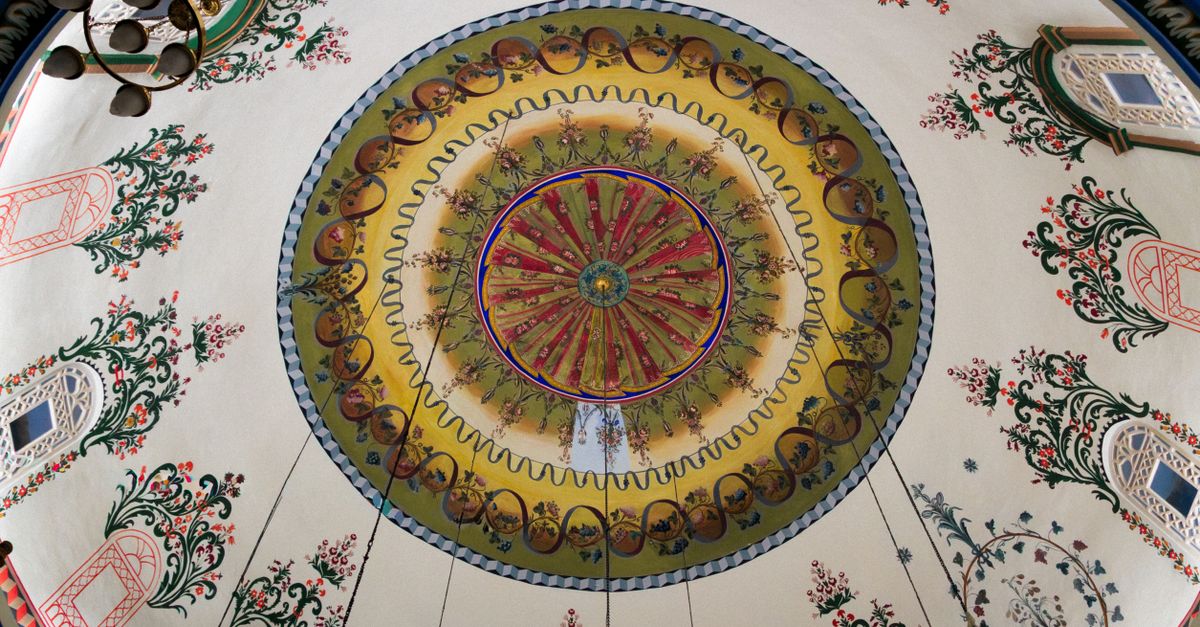
Tucked beneath the dramatic slopes of Šar Mountain, the city of Tetovo holds one of North Macedonia’s most unusual religious landmarks: the Šarena Džamija, or Painted Mosque. Unlike the plain stone or whitewashed mosques found elsewhere in the Balkans, this one is covered — inside and out — with vivid frescoes of flowers, geometric patterns, and architectural motifs. It’s a small building, but the detail packed into its walls makes it one of the most photographed sites in the region.
A Brief History of the Painted Mosque
The mosque’s origins date back to 1438, making it one of the older Islamic structures in North Macedonia. However, the building visitors see today is largely the result of a major reconstruction in 1833, commissioned by a local Ottoman-era figure, Abdurrahman Pasha. The interior and exterior frescoes were added during this period, transforming a relatively modest mosque into a richly decorated landmark.
The painting style reflects Ottoman-Balkan artistic traditions of the 19th century, blending floral motifs, pastel color palettes, and architectural illusions — arches, columns, and niches painted directly onto flat surfaces to create a sense of depth. Restoration work over the decades has helped preserve much of the original artwork, though some sections have faded with age.
The Legend of the Two Sisters
Local folklore adds a romantic layer to the mosque’s history. According to legend, two unmarried sisters, Hurshida and Mensure, donated their inheritance to fund the mosque’s reconstruction, wishing to leave something meaningful behind since they had no children of their own. Whether entirely accurate or partly myth, the story is widely told by guides and locals, and it’s part of what gives the mosque its enduring charm. Some accounts say the sisters are buried in a small tomb (türbe) near the mosque grounds, which visitors can still see today.
What Makes the Frescoes Unique
What sets the Painted Mosque apart from other Ottoman religious buildings in the Balkans is the sheer density of decoration. Nearly every surface — the exterior façade, the entrance porch, the interior ceiling and walls — is covered in painted ornamentation. Common motifs include:
- Floral garlands and vases of flowers
- Geometric and star-patterned borders
- Painted “windows” and architectural details that aren’t structurally real
- Calligraphic inscriptions in Arabic script
The overall effect feels closer to a folk-art gallery than a typical house of worship, which is exactly why it draws visitors who might not otherwise seek out religious architecture.
Visiting Tips
The Painted Mosque is a small, active place of worship, so a bit of preparation goes a long way:
- Dress modestly. Shoulders and knees should be covered for both men and women, and women are typically expected to cover their hair before entering the prayer hall. A scarf is handy to bring along, though they’re often available to borrow on-site.
- Remove your shoes before stepping onto the carpeted interior, as is customary in mosques.
- Visit outside prayer times if you want a quieter look around and more flexibility with photos. Friday midday is the busiest prayer period.
- Photography is generally welcome outside and often inside as well, but always ask first and avoid photographing anyone who is praying.
- A small donation is appreciated, as the mosque relies on community support for its upkeep and ongoing restoration.
- Allow 20–30 minutes for a relaxed visit — it’s compact, but worth slowing down for the details.
Nearby Attractions Worth Combining
Tetovo has more to offer beyond the mosque, so it’s worth building a short itinerary around your visit:
- Arabati Baba Teke – a well-preserved 16th-century Bektashi dervish complex just a short walk away, with peaceful courtyards and traditional architecture.
- The old bazaar area – good for a coffee stop or browsing local shops.
- Šar Mountain – for those with extra time, the mountain backdrop offers hiking trails and scenic viewpoints, especially appealing in spring and autumn.
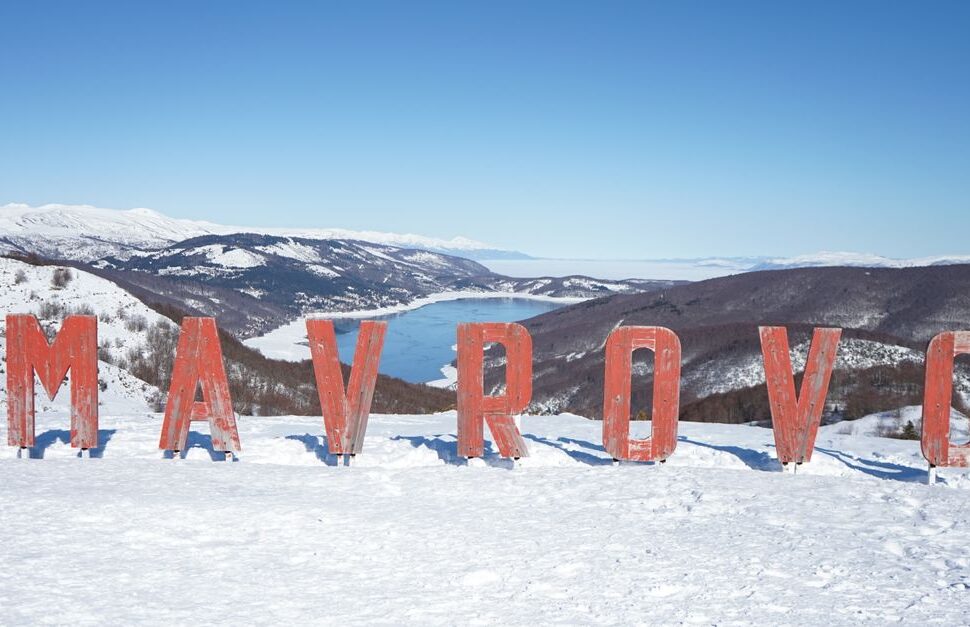
Many visitors pair Tetovo with a stop at the Bigorski Monastery or a longer day trip toward Mavrovo, since the route conveniently connects several of the region’s most scenic spots.
Getting to Tetovo
Tetovo sits roughly 40 minutes from Skopje, making it an easy half-day or combined day trip. Public buses run between the two cities, but schedules can be inconsistent and the mosque itself is a short taxi ride or walk from the main bus station depending on traffic.
For a more comfortable and flexible option, Millennium Express offers private transfers and day tours from Skopje to Tetovo, often combined with stops at Bigorski Monastery or Mavrovo National Park. Traveling privately means you can set your own pace, skip the guesswork of local transport schedules, and have a driver who knows the area well — a handy option if you’re short on time or traveling with family.
Whether you’re drawn by the frescoes, the folklore of the two sisters, or simply looking for a scenic day out from Skopje, the Painted Mosque in Tetovo is a rewarding stop that rarely disappoints once you see it in person.